Beauty’s Dark Side: Toxic Ingredients in Your Cosmetic Products
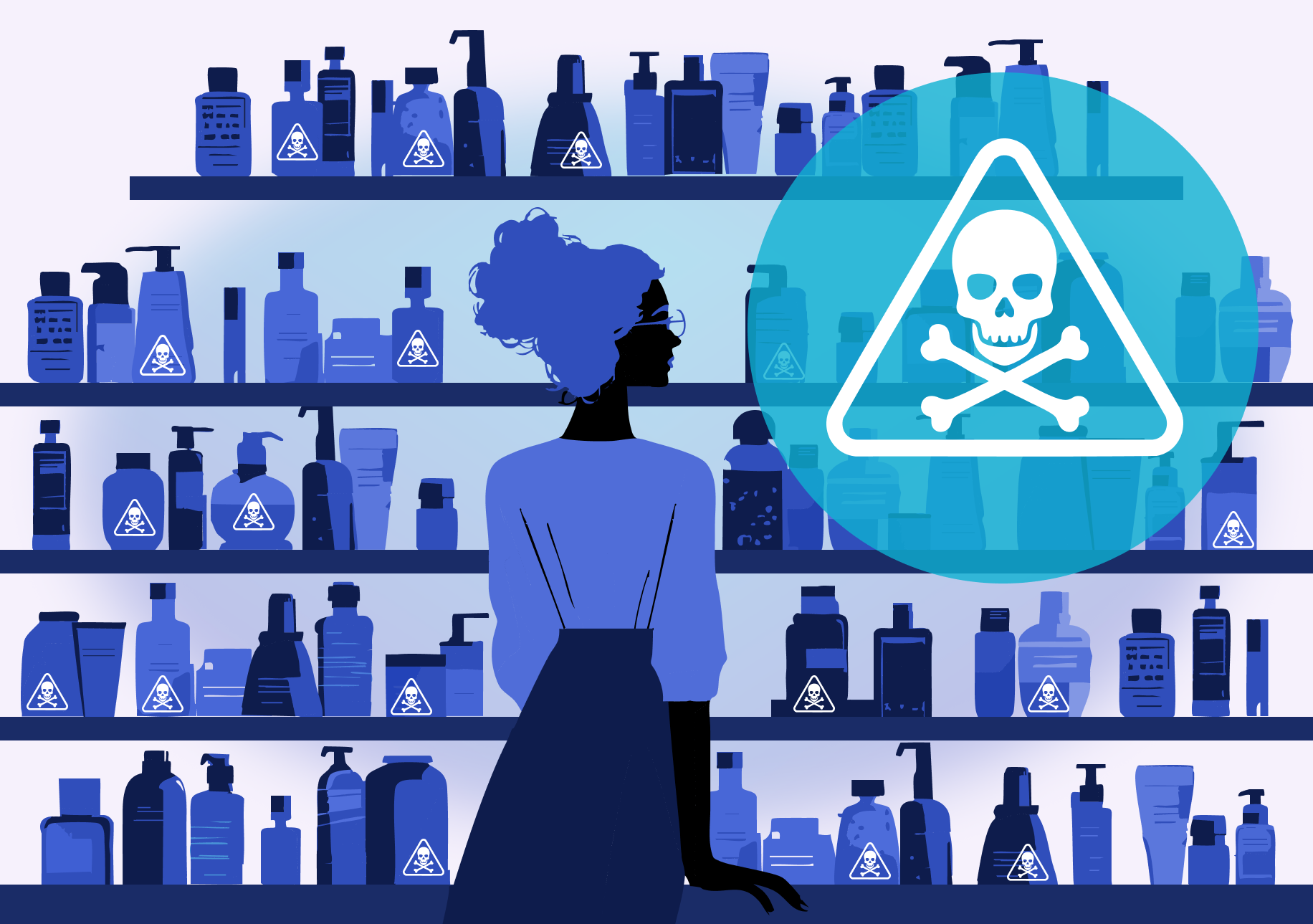
Hair dye, makeup and other beauty products may contain harmful ingredients like formaldehyde and talc. These ingredients have been linked to serious health issues, including cancer and reproductive problems. Drugwatch has compiled a list of five of the most dangerous chemicals, along with safety tips and a comparison of our side effect data with the FDA’s.
Our content is developed and backed by respected legal, medical and scientific experts. More than 30 contributors, including product liability attorneys and board-certified physicians, have reviewed our website to ensure it’s medically sound and legally accurate.
Drugwatch is trusted legal help when you need it most.
Drugwatch has provided people injured by harmful drugs and devices with reliable answers and experienced legal help since 2009. Brought to you by The Wilson Firm LLP, we've pursued justice for more than 20,000 families and secured $324 million in settlements and verdicts against negligent manufacturers.
More than 30 contributors, including mass tort attorneys and board-certified doctors, have reviewed our website and added their unique perspectives to ensure you get the most updated and highest quality information.
Drugwatch.com is AACI-certified as a trusted medical content website and is produced by lawyers, a patient advocate and award-winning journalists whose affiliations include the American Bar Association and the American Medical Writers Association.
I found Drugwatch to be very helpful with finding the right lawyers. We had the opportunity to share our story as well, so that more people can be aware of NEC. We are forever grateful for them.
Key Takeaways
Common toxic chemicals and ingredients found in beauty products include formaldehyde, parabens, PFAS, phthalates and talc.
Toxins in beauty products are linked to allergic reactions, cancer, endocrine disruption and respiratory problems.
FDA adverse event reports for hair relaxers and talcum powder appear to be underreported.
Unlike drugs and medications, cosmetics and beauty products don’t need to be approved by the U.S. Food & Drug Administration (FDA). Clinical trials aren’t required to verify safety or effectiveness.
To help protect you and your family, we’ve identified five of the most dangerous ingredients in beauty products, the health problems they’re linked to and what to look for on product labels. We also provide tips to lower your risk of exposure to toxic chemicals in beauty products.
1. Formaldehyde and Formaldehyde-Releasing Preservatives
Formaldehyde may be added directly into beauty products as a preservative or released from other included preservatives. It might appear in certain beauty product ingredient lists, especially chemical hair straighteners, as methylene glycol.
Formaldehyde Quick Facts
Found in: Hair smoothing and relaxing products, lotions, makeup and nail polish.
Health concerns: Asthma, cancer, eye irritation, respiratory symptoms and skin irritation.
What to look for on the label: Formaldehyde, methylene glycol, bronopol (2-bromo-2-nitropropane-1,3-diol), quaternium-15, diazolidinyl urea, DMDM hydantoin, glyoxal, imidazolidinyl urea, polyoxymethylene urea, sodium and hydroxymethylglycinate.
To avoid exposure, choose nail polishes that are labeled “formaldehyde-free” or “toxic-trio-free.” You may also want to avoid salon-based hair smoothing or straightening products because these could be exempt from labeling requirements.
Product Spotlight: Are Hair Relaxer Injuries Underreported?
Hair relaxers have been in the media recently because a 2022 study by the National Institutes of Health found women who used chemical hair straightening products more than four times a year had twice the risk of developing uterine cancer. Thousands of women have filed hair relaxer lawsuits.
From January 1, 2004, through December 8, 2025, Drugwatch received 5,042 reports of hair relaxer injuries. We compared this data with injuries reported to the FDA’s Adverse Event Reporting System (FAERS) Public Dashboard for Cosmetic Products. A search for “hair relaxer” or “hair straightener” during the same period yielded 53 adverse event reports.
Based on this discrepancy, hair relaxer and straightener injuries appear to be underreported.
Michele was a lifetime user of hair relaxers because she felt pressure to keep her naturally curly hair straight. At age 38, she developed breast cancer even though her family had no history of it. She died five years later.
Mike, Michele’s husband, told their story to Drugwatch to help spread awareness about the potential risks of hair relaxers and honor the love of his life.
“If there were a warning on those products, she wouldn’t have kept using them. She would have stopped immediately,” Mike said.
2. Phthalates
Phthalates function as plasticizers to increase flexibility in cosmetics like nail polish and hairspray. They are also used as solvents in fragrances.
These chemicals can appear as dibutyl phthalate (DBP), diethyl phthalate (DEP) and dimethyl phthalate (DMP).
“Phthalates are usually used to make fragrance last longer, so they can be found in perfumes, body sprays, lotions and scented body wash,” Dr. Mollie Kelly-Tufman, a biochemist and founder of the Beauty Lab, told Drugwatch.
Phthalates Quick Facts
Found in: Body wash, hair care products, hairspray, nail polish, perfumes and lotions.
Health concerns: Attention-deficit/hyperactivity disorder (ADHD), endocrine disruption, potential cancer risk and reproductive or developmental issues.
What to look for on the label: Phthalate, DBP, DEP, DEHP, DMP or fragrance.
The FDA does not have any evidence that phthalates in beauty products are a safety risk. However, some are banned in Europe, where they are recognized as endocrine disruptors toxic for reproduction.
“The U.S. FDA has no authority to require premarket data for chemical ingredients of products defined as ‘cosmetics,’ including verification of ingredient claims such as ‘phthalate free,’” Dr. Michael S. Bloom, a professor of global and community health at George Mason University College of Public Health, told Drugwatch.
“Phthalates are usually used to make fragrance last longer, so they can be found in perfumes, body sprays, lotions and scented body wash.”
3. Parabens
In cosmetics, parabens are used as preservatives. They’re often used in combination with other preservatives to prevent microorganisms from growing.
Parabens Quick Facts
Found in: Hair care products, makeup, moisturizers, shaving products and some deodorants.
Health concerns: Developmental and reproductive toxicity, endocrine disruption and potential links to skin cancer.
What to look for on the label: Butylparaben, ethylparaben, isobutylparaben, isopropylparaben, methylparaben and propylparaben.
“Parabens are usually used to prevent mold and bacteria and can be in the same products as phthalates but also in wipes, sunscreen and foundations,” said Kelly-Tufman.
4. PFAS (Per- and Polyfluoroalkyl Substances)
Per-and polyfluoroalkyl substances (PFAS) are man-made chemicals used in various products. Because they take a long time to break down, they are often called “forever chemicals.”
PFAS are added to beauty products because they increase product durability, spreadability and wear. They can also improve the appearance and texture of skin and increase skin absorption.
PFAS Quick Facts
Found in: Blushers, cleansers, eyeshadows, foundation, lipsticks, moisturizers, nail polish and rouges.
Health concerns: Developmental delays in children, hormonal disruption, immune system problems, increased cancer risk and reproductive problems.
What to look for on the label: Perfluorohexylethyl triethoxysilane, polytetrafluoroethylene (PTFE), tetradecyl aminobutyroylvalylaminobutyric urea trifluoroacetate, trifluoropropyl cyclopentasiloxane and trifluoropropyl cyclotetrasiloxane.
“[PFAS] are widely used in consumer goods, including personal care products, cosmetics and household cleaners. Laboratory studies have shown that some of these chemicals can disrupt hormone function, induce oxidative stress and inflammation and exhibit neurotoxic effects,” said Bloom.
In one study in Ecotoxicology and Public Health, researchers looked at 231 cosmetics. The highest percentages of fluorine (an indicator of PFAS use) were found in products like foundations (63%), eye products (58%), lip products (55%) and mascaras (47%).
“Laboratory studies have shown that some of these chemicals can disrupt hormone function, induce oxidative stress and inflammation and exhibit neurotoxic effects.”
5. Toluene
Toluene is a solvent used in nail products. It also has a few variations used in hair dyes, such as toluene-2,5-diamine, toluene-2,5-diamine sulfate salt and toluene-3,4-diamine.
Toluene Quick Facts
Found in: Hair dye, nail polish and nail treatment.
Health concerns: Allergic reactions, color vision and hearing damage, cognitive and neurobehavioral changes and respiratory irritation.
What to look for on the label: Toluene, toluene-2,5-diamine, toluene-2,5-diamine sulfate salt (PTDS) and toluene-3,4-diamine
PTDS was named 2025 Allergen of the Year by the American Contact Dermatitis Society because it may be an underdiagnosed allergen.
The Cosmetic Ingredient Review determined that toluene was safe at levels used in nail polish. However, it’s being phased out, and the number of toluene-containing products has dropped sharply.
Other Ingredients of Concern: Talcum Powder
Talc is a natural mineral that’s used in cosmetics to absorb moisture, make facial makeup appear opaque or improve the feel of a product.
However, talc often occurs naturally near asbestos, a mineral that is a well-known carcinogen. Consequently, some talc may be contaminated with asbestos during mining.
In 2020, a study in Environmental Health Insights found that 3 out of 21 powder-based cosmetic products were contaminated with asbestos. However, in 2024, the FDA said no asbestos was detected in 50 samples of talc-containing cosmetics tested in 2023.
Talcum Powder Quick Facts
Found in: Baby powder, body and shower products, deodorant, eye shadow, face masks, feminine hygiene products, foundation, lipstick and lotion.
Health concerns: Asbestos contamination, mesothelioma and ovarian cancer.
What to look for on the label: Cosmetic talc, magnesium silicate, talc and talcum powder.
Whitney Ray Di Bona, an attorney and consumer safety advocate with Drugwatch, first started looking into “clean beauty” and cosmetic safety after she represented women who developed cancer from using cosmetic powder products.
“As a lawyer, I was shocked. How can there be so little safety testing, and why do we permit the use of so many ingredients that are banned elsewhere?” Di Bona said. “Most people are unaware that the FDA doesn’t require companies to test cosmetics for safety before they reach the shelves.”
Product Spotlight: Are Talcum Powder Injuries Underreported?
Talcum powder made the news after women began filing lawsuits claiming that it led them to develop ovarian cancer.
We searched the FDA’s FAERS database for the word “talc.” The search yielded 216 products, including Johnson’s Baby Powder and Shower to Shower.
From January 1, 2007, to December 8, 2025, the FDA received 4,162 reports of adverse events related to talcum powder. In that same timeframe, Drugwatch received more than 7,300 reports of injuries, such as ovarian cancer, from talcum powder.
Comparing our data against the FDA’s, it appears that talcum powder injuries may be underreported to the FDA.
Children Are Vulnerable to Toxic Ingredients in Makeup and Beauty Products
Because their bodies are still developing, children may be more vulnerable to toxic ingredients in makeup and beauty products. Yet many products are marketed to children.
In a study in The International Journal of Environmental Research and Public Health, researchers found 79% of children used makeup and body products marketed to kids in their lifetime. Products included face paint, body glitter, lip gloss, foundation, nail polish, nail stickers, spray-on hair color, and perfumes or body sprays.
Naturopathic physician Dr. Rachel Marynowski has seen a growing number of young girls with thyroid imbalances in her practice.
“As with any hormonal concern, there’s rarely a single cause, but a growing body of research, and our clinical experience and observation, makes it increasingly evident that exposure to environmental chemicals and toxins, especially those known to affect the endocrine system, are playing a significant role,” Marynowski said.
While many factors can contribute to hormone imbalances, Marynowski said acknowledging environmental influences can help support early detection and thoughtful decisions about reducing exposure.
“Our clinical experience and observation makes it increasingly evident that exposure to environmental chemicals and toxins, especially those known to affect the endocrine system, play a significant role.”
What Are Regulators Doing About Toxic Cosmetic Ingredients?
On the other hand, the FDA announced it was withdrawing its proposed rule on testing for asbestos in talc-based cosmetics in November 2025.
“It’s hard to believe this isn’t required, especially since we know talc mines can be contaminated with asbestos,” said Di Bona.
What Consumers Can Do
As a consumer, you can keep yourself safe by staying informed, reading labels and supporting legislation aimed at making cosmetics safer.
“Alongside reviewing product labels, [consumers should consider] researching and keeping informed about hazards associated with chemicals or ingredients with adverse side effects, complaints or reports of products using reputable sources. Products with significant complaints should be avoided,” said Dr. Christa Wright, Director of Toxicology at the Center for Toxicology and Human Health with UL Research Institutes’ Chemical Insights.
Tips to Reduce Exposure to Harmful Chemicals in Cosmetics
You can also support legislation aimed at making cosmetics safer. For example, U.S. Representatives Lizzie Fletcher, Doris Matsui, Ayanna Pressley and Jan Schakowsky introduced the Safer Beauty Bill Package in July 2025.
The package of four bills includes requirements for stronger ingredient disclosures on labels and more funding for research and education on toxic chemicals. You might be able to help these bills pass by contacting your representative to show your support.
“Alongside reviewing product labels, [consumers should consider] researching and keeping informed about hazards associated with chemicals or ingredients with adverse side effects, complaints or reports of products using reputable sources.”
Please seek the advice of a medical professional before making health care decisions. Thoughts and opinions expressed in personal stories are strictly anecdotal and should not be taken as medical information or advice.
We appreciate your feedback. One of our content team members will be in touch with you soon.
We appreciate your feedback. One of our content team members will be in touch with you soon.
Who Am I Calling?
Calling this number connects you with a Drugwatch.com representative. We will direct you to one of our trusted legal partners for a free case review.
Drugwatch.com's trusted legal partners support the organization's mission to keep people safe from dangerous drugs and medical devices. For more information, visit our partners page.



 “Phthalates are usually used to make fragrance last longer, so they can be found in perfumes, body sprays, lotions and scented body wash.”
 “Laboratory studies have shown that some of these chemicals can disrupt hormone function, induce oxidative stress and inflammation and exhibit neurotoxic effects.”

 “Our clinical experience and observation makes it increasingly evident that exposure to environmental chemicals and toxins, especially those known to affect the endocrine system, play a significant role.”

 “Alongside reviewing product labels, [consumers should consider] researching and keeping informed about hazards associated with chemicals or ingredients with adverse side effects, complaints or reports of products using reputable sources.”