Missouri Man’s Life Forever Changed After Using Common Antibiotic


Before his medical emergency, Missouri resident Gary Phillips described himself as healthy, active and independent. He had never smoked, drank only occasionally and took no prescription medications. He worked in his son’s medical office, handled business matters such as lease negotiations, and readily helped family members when they moved.
Gary told Drugwatch, “I did everything I wanted to do.” He added, “I had a good quality of life.”
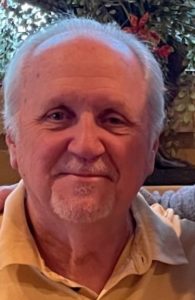
That life changed after Gary was prescribed levofloxacin, the generic version of the fluoroquinolone antibiotic Levaquin. He took the medication for seven days. He said no one warned him about serious risks.
“I did not receive any notification, any danger or warnings of it. They wrote the prescription, of course, I just went and filled it and took it for seven days.”
Gary later experienced an aortic dissection and aneurysm. An aortic dissection is a tear in the aorta, and it’s a medical emergency. An aortic aneurysm is a bulge in the aorta and it can lead to a tear in the blood vessel. His treatment included an eight-hour surgery. He also suffered a stroke and began having seizures during his hospitalization.
After an aortic dissection, aneurysm, major surgery and stroke, he now lives with the aftereffects of seizures, disabling dizzy spells and a loss of independence. What Gary didn’t know then was that studies have linked fluoroquinolone antibiotics like Levaquin and Cipro with an increased risk of aortic aneurysm and dissection.
Warnings Came Too Late
An aortic dissection occurs when a tear in the inner layer of the aortic wall allows blood to enter between layers of the vessel wall. Depending on its location and severity, a dissection may require emergency surgery.
In 2018, the U.S. Food and Drug Administration warned that fluoroquinolone antibiotics can increase the occurrence of rare but serious ruptures or tears in the aorta. Current levofloxacin prescribing information says epidemiologic studies have found an increased risk of aortic aneurysm or dissection within two months after fluoroquinolone use.
However, doctors prescribed levofloxacin to Gary in early 2017 before the FDA warning. Gary said that even his family members who are physicians had not been told about the danger at the time. His son is a vascular surgeon, and his son-in-law is a urologist –– neither was aware of the risk.
Years later, Gary said, doctors appear more aware of the association. He recalled a physician immediately recognizing the antibiotic issue when his son discussed the aortic dissection as part of the family’s medical history.
“I mean, so there’s doctors that know that now.”
After the harrowing surgery, Gary took it upon himself to do research.
“After I returned home from my three-week hospital stay and emergency surgery for a Type A aortic dissection, I began to research what caused my life-threatening situation. My internet search did not take long to reveal that taking levofloxacin may cause an aortic dissection.”
Because of the lack of warnings, people filed fluoroquinolone lawsuits over injuries such as tendon rupture, peripheral neuropathy, aortic rupture, dissection and aneurysm.
Stroke, Seizures and a Long Recovery
Gary’s aortic emergency required major surgery. After his stroke, he began having seizures. At first, the episodes ended before hospital staff could observe them. His wife eventually recorded one on her phone, which helped the medical team identify what was happening.
“And of course, once they saw the video, they said, ‘oh yeah, it’s a certain kind of seizure,’ and they knew it.”
Doctors prescribed the anti-seizure medication Keppra. Gary said the seizures continued for about six months. As they subsided, however, dizzy spells became part of his daily life.
Living With Dizzy Spells and Lost Independence
Gary continues to have dizzy spells every week. Some cause nausea. The most severe can last for hours and force him to lower himself to the ground to avoid falling.
“I’ve had it so bad. Sometimes I’ve had to get to the floor before I fall, grab something and crawl back into my bedroom to where I could get into bed.”
Bright outdoor light coming through a window can trigger an episode. Each morning, Gary puts on a hat and dark glasses and keeps them on until nightfall.
“So I put a hat on in the morning, I put some blocked out glasses on and I get through the day until dark.”
The spells have taken away much of his independence. He can’t work. Travel is difficult, and he sometimes misses out-of-town family events.
“I don’t drive anymore. My wife has to drive me to any place I want to go,” Gary told Drugwatch. “I can still go to the grocery store with my wife of 58 years of marriage, but I cannot lift more than 10 pounds. My wife has been my caregiver since the aortic dissection, and I depend on her to lift everything. This restriction limits everything I do in life.”
Gary has also developed tremors. His doctor told him they were not related to Parkinson’s disease and thought they were essential tremors — shaking that a person can’t control — but Gary said he does not know what caused them. The shaking makes eating difficult.
While his doctors haven’t given him a diagnosis, there have been rare case reports of people who suffered tremors after taking fluoroquinolones, such as Cipro.
“I don’t like to go out to eat because it’s a little embarrassing,” Gary said. His approach is to adapt to each new limitation as best he can. “It’s just something you just deal with.”
‘People Really Need To Be Cautious’
Gary now asks questions whenever a doctor recommends a medication. He wants to understand the possible side effects and why the benefits justify the risks.
“I think you need to ask about the dangers, the problems with it, you know, the side effects, and determine if it’s worth the risk.”
He said his experience taught him to challenge his doctors when necessary and advocate for himself. His advice to anyone prescribed levofloxacin is straightforward: “I just think people really need to be cautious.”
Gary chose to share his story because he wants people to know what happened to him. He hopes his experience encourages others to ask questions before taking medication and to learn about risks that may not have been fully understood or communicated in the past.
“I now have a dozen stents in my chest and stomach area. My aorta has been destroyed on the ascending aorta, arch and descending aorta. I believe my aorta was destroyed after using levofloxacin.”
While his struggles after taking levofloxacin have been life-changing, Gary is eager to share his experience with others to help prevent similar reactions for other patients.
“I do want to say I did appreciate your [stories] because I thought people need to know this. They need to know these things.”
Calling this number connects you with a Drugwatch.com representative. We will direct you to one of our trusted legal partners for a free case review.
Drugwatch.com's trusted legal partners support the organization's mission to keep people safe from dangerous drugs and medical devices. For more information, visit our partners page.