Big Pharma Behind the Scenes: Patients, Profits and Penalties
Pharmaceutical breakthroughs promise healthier or more convenient lives. But behind the headlines lies a more complicated reality. Drugwatch’s investigation explores how lax oversight, aggressive marketing and profit pressures can risk patient safety — and how lawsuits often become the last line of defense.
Our content is developed and backed by respected legal, medical and scientific experts. More than 30 contributors, including product liability attorneys and board-certified physicians, have reviewed our website to ensure it’s medically sound and legally accurate.
Drugwatch is trusted legal help when you need it most.
Drugwatch has provided people injured by harmful drugs and devices with reliable answers and experienced legal help since 2009. Brought to you by The Wilson Firm LLP, we've pursued justice for more than 20,000 families and secured $324 million in settlements and verdicts against negligent manufacturers.
More than 30 contributors, including mass tort attorneys and board-certified doctors, have reviewed our website and added their unique perspectives to ensure you get the most updated and highest quality information.
Drugwatch.com is AACI-certified as a trusted medical content website and is produced by lawyers, a patient advocate and award-winning journalists whose affiliations include the American Bar Association and the American Medical Writers Association.
I found Drugwatch to be very helpful with finding the right lawyers. We had the opportunity to share our story as well, so that more people can be aware of NEC. We are forever grateful for them.
Revolutionary medical advances transform lives and improve health care around the globe. But behind the breakthroughs, drugs and devices are sometimes rushed to market with limited evidence. Risks may be found too late or intentionally hidden to boost profits and marketability. When regulation and oversight fail, lawsuits often become the stopgap.
Drugwatch’s investigation draws on reporters, whistleblowers, doctors and industry insiders to expose hidden data that drives billion-dollar settlements. As legal cases unearth questionable industry practices, we’re left wondering: Is litigation enough, or does drug safety need stronger safeguards before another crisis?
Dive deeper: Listen to the Big Pharma Behind the Scenes podcast
The Cost of Failure Measured in Injuries, Deaths and Lawsuits
A secret Drug Enforcement Administration (DEA) database called ARCOS sat locked away for years, mapping every opioid pill shipped from factories to pharmacies. Only opioid lawsuits forced it into public view, revealing how distributors pumped millions of doses into tiny towns.
Aggressive opioid marketing and overprescribing led to what we now call the opioid crisis, killing thousands and devastating communities, especially in Appalachia. Lawsuits led to drugmakers and distributors paying billions in settlements, which changed how opioids are promoted and dispensed.
ARCOS, an abbreviation for Automation of Reports and Consolidated Orders System, allowed lawyers to track the flow of opioids, resulting in some of the largest courtroom settlements in history. Those multibillion-dollar payouts hit the pharmaceutical industry’s bottom lines in turn, leading to concrete public health reform.
Nora Freeman Engstrom, the Ernest W. McFarland Professor of Law at Stanford Law School, told Drugwatch that lawsuits serve as an “information-forcing function.”
“Probably the most important thing tort law does … is not about the money obtained, but it’s the information unearthed,’ Engstrom told Drugwatch.
She said that discovery — the formal pre-trial process where parties gather evidence and exchange information about witnesses, documents and facts — “has a way of shaking the pockets of companies.”
The ARCOS data, which Engstrom calls the “Rosetta Stone of the opioid crisis,” showed billions of oxycodone and hydrocodone pills flooding the U.S. from 2006 to 2019. Some small-town pharmacies took millions of doses for tiny populations, like the more than 10 million pills that passed through Tug Valley Pharmacy in Mingo County, West Virginia.
That should have been a red flag that manufacturers, distributors and pharmacies recognized. Large amounts of opioids were being diverted from patients who were prescribed pain medication to people who were addicted to pharmaceutical narcotics. And with lax prescriptions and incentivized sales, many people who were treated with opioids after an operation or for other medical conditions became addicted to the pills.
"The ARCOS data is what I call the Rosetta Stone of the opioid crisis. It maps every pill that’s manufactured and ultimately where it’s sold.”
The DEA had the data but did nothing. Lawsuits unsealed it after a media fight, proving “beyond a shadow of a doubt,” as Engstrom put it, the complicity of distributors and pharmacies pumping pills into poor communities.
Once lawsuits forced ARCOS public, it exposed a staggering oversupply — 76 billion oxycodone and hydrocodone pills shipped between 2006 and 2012.
This is just one example of how litigation plays a major role in regulating the drug industry. Lawsuits can expose hidden evidence that pharmaceutical companies may use to profit, even if those profits come at the expense of public health.
Journalists Expose Failed Drug Testing Criteria
When a drug or device hits the market on shaky evidence, real‑world consequences often emerge only after millions of prescriptions or implants. Patients and families then turn to litigation not just for compensation, but to uncover what companies knew about risks and when they stayed silent.
Reporters Shannon Brownlee and Jeanne Lenzer are investigative journalists specializing in medical issues. Their recent publication in The Lever dissects how bad medicine makes it to market, examining the shortcomings of new drug testing and Big Pharma’s relationship with regulators.
With more than 40 years of combined experience, they created a database of U.S. Food and Drug Administration (FDA) approvals from the past decade and tested them against the agency’s gold‑standard criteria: control groups, blinding, replication and meaningful clinical outcomes.
Their findings shocked even them.
“We found that 73% of all drugs failed on at least one of those essential criteria, and a stunning number failed to have any of those essential criteria, and they’re getting on the market,” Lenzner told Drugwatch.
Brownlee highlighted the human toll of these failures. She said their investigation found that early trials often lack the scale to detect rare drug-related harms.
“If it doesn’t work, all it’s gonna do is either not hurt you and cost you a lot of money, or hurt you and cost a lot of money,” she said.
Marketing Over Material: Vioxx Scandal Uncovers Safety Gaps
When regulators miss signals, whistleblowers often sound the alarm. Louis Clark, executive director of the Government Accountability Project since 1978, told Drugwatch about his organization’s experience during the Vioxx crisis.
“We represented David Graham, who was the FDA whistleblower,” he said.
Dr. Graham was an FDA epidemiologist who exposed the deadly side effects of Vioxx, Merck’s blockbuster prescription painkiller. The medication was pulled from the market in 2004 after it was linked to thousands of heart attacks. While Graham warned of the risks, lawsuits later confirmed Merck knew, but ignored internal data.
“They indeed had identified within the company the problems with heart attacks and strokes, and they chose to ignore it,” Gates told Drugwatch.
That litigation yielded a $4.85 billion settlement. Clark called it “the incredible watershed case.”
William Soliman, PhD, founder and CEO of the Accreditation Council for Medical Affairs and former Merck sales rep, saw the pressure firsthand.
“The higher dose of Vioxx was indicated for a short duration … and they were basically encouraging physicians to use it longer term,” Soliman told Drugwatch. “That’s really technically an off-label push.”
Off-label use, when a drug is used for a condition or purpose for which it is not FDA-approved, was cited in the Justice Department’s litigation against Merck over Vioxx. Merck paid a $322 million fine for illegal marketing.
Soliman noticed doctors comfortably prescribing higher, long-term doses — an issue tracing back to marketing efforts beyond arthritis approval. Vioxx competed with Pfizer’s Celebrex, used to treat pain from arthritis, menstrual cramps and general aches. According to Soliman, Merck hoped that Vioxx would “bring the company to the next level” as a revenue driver.
In 2000, a randomized clinical study revealed that patients taking Vioxx had about four times the risk of heart attacks. But even when those warning signs emerged, Merck kept the drug on the market for nearly four more years. By then, 100 million Vioxx prescriptions had been filled in the United States.
“This [Vioxx] was a big, big revenue driver for Merck. They had a lot of big projections for Vioxx.”
Soliman, later a medical science liaison at another top-five Big Pharma company, said he saw internal culture stifle debate over contradictory drug data.
“The manager of the team … came up to me [and said] ‘Hey, can you kind of quiet down those other medical liaisons? They just keep criticizing our data,’” Soliman said.
Shaky trials, whistleblowers and commercial pressure form a pattern. When regulators lag, litigation and insiders force accountability — measuring failure in injuries, deaths and billion-dollar settlements.
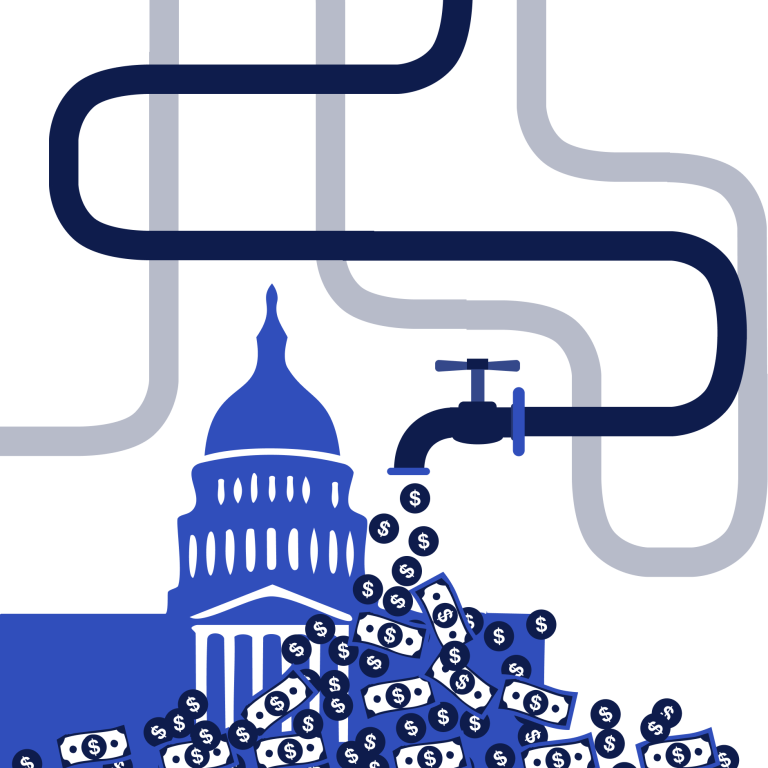
“Many people view lawyers and those who file lawsuits negatively. But imagine how much corruption would go unchecked if individuals weren't willing to challenge big corporations and if there weren't lawyers to take them on.
Civil lawsuits force companies to turn over internal documents and data that patients and even regulators may have never seen. Corporations will go to great lengths to hide this information, even when required by law to turn it over.”
Inside the Machine: Big Pharma, Profits and Lawsuits
The legal playbook doesn’t begin when a lawsuit is filed. It starts years earlier, when companies design trials, craft messaging and plan for risks. When products fail, they employ strategies like the “Texas Two-Step” to avoid paying large sums to settle massive lawsuits.
When Johnson & Johnson faced thousands of talcum powder lawsuits claiming the bathroom staple caused cancer, J&J whipped out this courtroom dance move to minimize business losses.
The Texas Two-Step maneuver meant creating a new subsidiary, transferring all talc-related liabilities to it and then quickly placing that entity into bankruptcy. The move paused tens of thousands of lawsuits and aimed to resolve claims through a capped bankruptcy settlement while protecting J&J’s main assets.
But judges threw the plan out of court — three times.
These strategies reveal how drug and device makers shape science, sales and even courtroom outcomes long before patients learn of potential dangers.
Working Within the System: Drugs on the Market With Modified Approval
Reporters Brownlee and Lenzer trace corporate strategies back to FDA approvals.
“Their spin is so good that they see a lot of flaws and red flags and they are already spinning them well before they even put it on the market,” Lenzer said.
Lenzer highlighted Elmiron, a bladder pain treatment for interstitial cystitis patients. The FDA approved it on a “compassionate use” basis with a promise of post-market proof that never fully materialized.
“The FDA said, ‘there’s no evidence this thing works,'” Lenzer explained. “And finally, what the company said was, ‘well, we’ll make a deal with you.'”
In other words, the marketing machine can outrun the science. Companies secure approval on thin or conditional evidence, then shift the burden of proof to the post‑market phase — a stage where follow‑up studies can be delayed, diluted or quietly dropped even as real patients are exposed.
Whistleblower advocate Clark of the Government Accountability Project also detailed his experience with the industry’s typical response to internal alarms about problematic drugs.
“Incredibly aggressive,” he said of legal tactics. “If someone has raised a concern, there’s just a lot of pressure on that person to shut up.”
And if you’re a whistleblower inside a company, he says your good intentions of raising an alarm could haunt you for the rest of your career.
“Once you leave that company … for the rest of your life, you are really restricted in terms of what you’re able to say,” Clark said, noting non-disclosure agreements and internal pressure.
And former pharma insider Soliman confirmed that litigation risk is calculated from launch. Every promotional material passes medical, legal and regulatory (MLR) review, weighing lawsuits against revenue potential.
“There’s always a calculation of risk,” he said. After the Vioxx scandal, Soliman noted more transparency. After seeing what happened with Merck, he said that companies are much more forthright in saying, “Look, this is the data that we found.”
Yet the machine persists, turning potential harms into line items while patients face the consequences.
“One thing that stands out is that 'legal' isn't just about what happens after someone gets hurt. It shapes the story from the very beginning.
The medical, legal and regulatory review that Soliman described is meant to protect patients, but it can also be used to clean up messaging while still pushing the boundaries of what is profitable.
Litigation does two things: It reveals what was happening inside the company through discovery, internal emails and sworn testimony. It also changes how companies weigh the risks and benefits when deciding whether to take similar risks again.”
Playing the Long Game: Socialized Risks, Privatized Profits
Drug companies typically pour billions into development, then charge premium prices to recoup their gamble — even when evidence is thin and risks emerge later.
A 2023 BMJ study found that thousands of orphan drug approvals for common cancers rely on small trials that can overestimate effectiveness.
Orphan drugs are medicines made for rare diseases affecting small patient groups. Because they yield little profit, the FDA offers incentives such as tax credits and market exclusivity to promote development. They may be “fast-tracked” in less time than the standard FDA approval process.
“[Pharmaceutical companies] have basically socialized risk and privatized the profit.”
Brownlee and Lenzer told Drugwatch that the public foots the bill multiple times over.
“These companies put all this financial risk into the process of developing drugs, they then feel justified … in taking very, very big profits on drugs that get approved,” Brownlee said.
At the same time, she says, patients, taxpayers and employers pay through premiums, taxes for Medicare and Medicaid, and again when harmed patients need care.
“They’ve basically socialized risk and privatized the profit,” she said.
Lenzer focused on failures in post-market surveillance. She says warning signs like limited effectiveness and serious harms are often ignored because companies prioritize profits over safety.
Patent protection keeps prices high, while it can take years to get the data from the FDA. The agency told Lenzer and Brownlee there was a decade-long wait when they asked for information about Alzheimer’s drugs Aduhelm and Leqembi.
“We filed Freedom of Information Act requests for the mortality data … and we were told that the FDA will not release those data until 2036 and 2037,” Lenzer said.
Direct-to-Consumer Marketing: An American Strategy to Feed Revenue
The pharmaceutical industry markets medications directly to consumers. Dr. Peter Kowey, a cardiologist and professor at Thomas Jefferson University, questioned these seemingly endless drug ads urging patients to “ask your doctor.”
“If you need to ask your oncologist about a new drug for pancreatic cancer that maybe you should get, then you certainly should have another oncologist,” he said of the longtime pharmaceutical sales pitch.
Kowey authored Failure to Treat, a collection of patient stories he gathered from years in his practice, which he uses to illustrate what he calls a broken health care system.
He served on FDA advisory committees where discussions of pricing were banned by law — committees focused solely on safety and efficacy. Kowey sees greed in direct-to-consumer marketing that drives demand and justifies higher prices.
“The pricing for drugs is clearly reckless,” he said. ”We are being overcharged for medication, which means that many patients can’t access the medications.”
Europe ties premium pricing to clear superiority over existing drugs. The U.S. allows marginal or equivalent drugs to launch at staggering prices, propped by ads and lobbying.
“If you need to ask your oncologist about a new drug for pancreatic cancer that maybe you should get, then you certainly should have another oncologist.”
Litigation rarely changes this calculus. Clark, of the Government Accountability Project, told Drugwatch that even billion-dollar settlements aren’t the deterrent that people might think.
“I frankly think it’s a cost of doing business,” he said.
Clark pointed to OxyContin, where Purdue Pharma ignored addiction and overdose data as aggressive sales tactics caused profits to soar. Insiders struggled to get prosecutors to listen amid industry and political pressure.
Companies maximize revenue through extended patents, orphan drug incentives and marketing blitzes. When harms surface, and payouts happen years later, they barely dent the windfall. Patients pay upfront, then again through injuries and access barriers. Litigation exposes truth but rarely resets the profit-first playbook.
“Lawsuits force disclosure of internal documents on side effects, marketing and pricing, leading to stronger warnings, product changes or even withdrawals. But as Clark notes, if settlements look small next to profits — without admissions of wrongdoing or monitors — they’re just business expenses. True consumer protection demands litigation large and transparent enough to shift boardroom incentives, functioning as real regulation rather than cleanup.”
Profits vs. Penalties: Big Government Settlements Against Big Pharma
From 1991 to 2021, federal and state governments brought nearly 500 actions against drug manufacturers, forcing them to pay more than $62 billion in penalties, according to a report from the consumer advocate group Public Citizen.
Over the same period, 35 of the largest companies earned about $1.9 trillion in net income, underscoring how even massive fines barely dent the industry’s profits. The numbers reveal a pattern of persistent misconduct rather than isolated slip‑ups — especially at a handful of recurring companies.
Source: Public Citizen
From 2020 through 2021, opioid litigation accounted for 81% of all federal and state enforcement settlements.
Taken together, these figures form a sobering scoreboard: Big Pharma persistently breaks the rules, pays steep but manageable penalties and continues to earn enormous profits — leaving the question of real accountability open.
According to the Public Citizen report, the four most common repeat offenders during the review period were penalized 45 times.
Big Pharma Companies With Multiple Enforcement Settlements (1991–2021)
COMPANY
SETTLEMENTS
Pfizer
15
Novartis
12
GlaxoSmithKline (GSK)
9
Bristol Myers Squibb
9
Source:
Public Citizen
The four companies that paid the most in settlements shelled out nearly $30 billion.
Big Pharma Companies With the Highest Total Settlements (1991–2021)
COMPANIES
SETTLEMENT TOTALS
Purdue Pharma
$8.9B
Johnson & Johnson
$8.4B
GlaxoSmithKline (GSK)
$7.9B
Pfizer
$4.7B
Source:
Public Citizen
These are the enforcement actions that, in many ways, define how regulators have tried to hold Big Pharma accountable. It’s important to note that government settlements simply resolve the allegations agencies brought against a company. As part of the deal, there is no formal determination of liability on the part of the company.
How ‘Private Attorneys General’ Regulate Big Pharma’s Actions
Legal scholar Engstrom told Drugwatch that repeat settlements only go beyond the “cost of doing business” when they uncover information that shifts public perception.
“You see changes when you see litigation,” Engstrom said. The information unearthed in discovery can “infiltrate the popular imagination” and see Big Pharma or other defendants as “bad actors.”
Litigation arrives “ex post” — after injured patients emerge — but sparks “ex ante” regulation when plaintiffs’ lawyers invest millions in risky cases.
“Tort law comes in after the fact,” Engstrom said. “You already have an injured body or a dead body … you need this ex post wake up that then can trigger the ex ante regulation.”
Engstrom calls these lawyers “private attorneys general,” filling gaps for cash-strapped agencies. For example, she points to plaintiffs’ attorneys and government regulators working hand in hand on tobacco lawsuits. She credits their work, leading to higher taxes and smoking bans, with reduced smoking-related fatality rates. Opioid cases show similar promise, she said.
“You see changes when you see litigation.”
Drugwatch compiled a list of the 10 largest government settlements with pharmaceutical companies — cases that put names, drugs and dollar amounts to the enforcement patterns outlined in Public Citizen’s report. These include settlements with the U.S. Department of Justice, state attorneys general, counties and municipalities.
Big Pharma’s Largest Government Enforcement Settlements
AMOUNT
COMPANY
BACKGROUND
$54.7B
Multiple pharmaceutical manufacturers, distributors and retailers.
(2022 - Ongoing)
The major opioid settlements combined payouts to fund treatment, prevention, recovery, victim claims and abatement across states, local governments and tribes.
Pfizer was accused of paying kickbacks to doctors for off-label use of the anti-inflammatory drug Bextra. It was the largest criminal fine in U.S. history at the time.
The DOJ accused Merck of promoting Vioxx for rheumatoid arthritis before FDA approval and misleading doctors and Medicaid about its heart safety, causing improper government payments.
When you add these cases together, plus other federal and state actions, tens of billions of dollars flow from a few firms, with opioids dominating recent payouts. Yet, compared to industry profits, fines remain a small slice often absorbed as business costs without follow-up enforcement or accountability.
Comparing $62.3 billion in penalties over three decades with $1.9 trillion in net income is like being fined $62 out of $1,900 — or paying just one dollar in penalties for every $31 of profit.
“Courts are using lawsuits to clean up damage after it happens, but not changing the incentives that caused the problem.
If companies make far more in profits than they pay in penalties, litigation just becomes another cost of doing business — not a real deterrent.
Enforcement is reactive, not consistent. We see the same offenders, few criminal prosecutions and most recoveries tied to the opioid crisis. Enforcement spikes only when the disaster is too big to ignore.
Changing the rules would help: more criminal accountability, better whistleblower protection and settlements that actually change company behavior.
Litigation only becomes real regulation with these changes. Without them, expect the same companies in the headlines — and on the next list of big settlements.”
Record Settlements: Vioxx and Major MDLs Move the Needle
When people file lawsuits over a drug that ended up causing harm, the lawsuits usually include a “failure to warn” claim. This argues that the company either knew or should have known about the risk of the particular injury. When so many people file lawsuits over the same issue, the courts sometimes combine these cases into a single multidistrict litigation (MDL) to streamline the legal process.
Engstrom told Drugwatch that MDLs uniquely serve public health by consolidating these scattered injuries. She started with one of the most famous series of lawsuits against a popular medicine that contributed to thousands of deaths — Vioxx.
“Vioxx was a prescription painkiller that was ultimately taken by some 20 million Americans … seen as kind of a super aspirin,” Engstrom explained.
Marketed as safer than Aleve, Vioxx reached millions before heart attack and stroke risks emerged. An MDL was formed in New Orleans under Judge Eldon Fallon. The discovery process turned up an internal document that changed everything.
Engstrom explained that Merck used a training game for sales representatives known as “Dodge Ball Vioxx.” The technique aimed to tamp down cardiologists’ fears that Vioxx led to cardiac events, despite the company’s internal documents suggesting that the drug could cause harm.
That internal contradiction — acknowledging mechanism-based heart problems while training reps to deny them — surfaced only through coordinated MDL discovery. Merck settled 27,000 claims for $4.85 billion.
At Stanford Law School, Engstrom teaches Vioxx as the classic case: Individual lawsuits multiply into mass proceedings that unearth what regulators and doctors miss, often prompting label changes, withdrawals or FDA post-market reforms.
Inside the Biggest Drug and Device Settlements
Drugwatch compiled a list of Big Pharma’s largest product liability and personal injury settlements, including MDLs.
Big Pharma’s Largest Product Liability Settlements
AMOUNT
COMPANY & PRODUCT
BACKGROUND
$17B+
(Proposed)
Bayer - Roundup*
(2020–2026)
In 2020, Bayer settled most U.S. cancer and other claims for $10 billion. It’s now planning a $7.25 billion settlement for the remaining non-Hodgkin lymphoma suits.
$9B**
(Proposed)
Johnson & Johnson** - Talcum Powder
(Ongoing)
J&J faces claims that its talc products caused ovarian cancer and mesothelioma. Courts keep rejecting its bankruptcy settlement plans.
$8B+
Seven different companies - Transvaginal Mesh
(2017–2021)
Women sued over mesh implants causing pain, infections and extra surgeries. Big jury wins forced global settlement deals.
$4.85B
Merck - Vioxx
(2007)
Merck settled 27,000 heart attack and stroke suits after hiding heart risks. Internal documents proved the danger.
$2.4B
Takeda - Actos
(2015)
Takeda paid for over 9,000 bladder cancer claims from its diabetes drug. Trial losses led to the global deal.
$2.2B
GSK - Zantac
(2024)
GSK settled 80,000 suits over cancer-causing contamination in Zantac. They pulled it from shelves, then relaunched a new version with a different formula.
$1.7B
Bard/BD - Hernia Mesh
(Ongoing)
BD faces 38,000 claims of mesh failures, infections and repeat surgeries. Settlements cover the painful complications.
$800M
Johnson & Johnson - Risperdal
(2021)
J&J settled 9,000 cases where the antipsychotic caused breast growth in boys. Huge jury verdicts forced the payout.
$775M
Bayer/Janssen - Xarelto
(2019)
Bayer and J&J's Janssen settled 25,000 bleeding injury suits over the blood thinner. It caused dangerous, hard-to-stop bleeds.
*Though this did not involve a medical product, it is produced by one of the largest pharmaceutical companies in the world. **The talcum settlement has not been concluded.
These record settlements — totaling more than $46 billion — reflect the scale of harm and companies’ resistance. Beyond payouts, they create public records of internal decisions that regulators rarely see.
Multidistrict Litigation and the Opioid Crisis
Multidistrict litigation also played a huge role in resolving the opioid crisis.
“[The] Opioids [MDL] is different in that the opioid cases were brought by cities, counties, municipalities and tribes — not by individuals,” Engstrom noted.
The opioid settlements were among the largest in history, accounting for the four largest MDL settlements of this century based on Drugwatch’s review.
Largest Opioid MDL Settlements
AMOUNT
COMPANIES INVOLVED
BACKGROUND
$26B
McKesson, Cardinal Health, AmerisourceBergen, Johnson & Johnson (Janssen)
The settlement involved 46 states plus local governments. The money from the settlement is earmarked to fund treatment, prevention and recovery after oversupplying pills.
$20B
CVS, Walgreens, Teva, Allergan, Walmart
The settlement with states and municipalities was for failing to monitor, dispense or market opioids responsibly.
$7.4B
Purdue Pharma, Sackler family
A bankruptcy deal shut down the company. Money from the settlement will pay states, tribes, communities and victims for costs associated with injuries, including addiction, overdose and
neonatal abstinence syndrome.
$1.37B
Kroger
The agreement was with 33 states, D.C. and Native American tribes for mishandling prescriptions in pharmacies.
Multidistrict litigations typically turn scattered personal injury claims into powerful reckonings. In the case of the opioid settlements, they funded remediation and created public records that regulators often miss. Ultimately, MDLs protect public health by holding corporations accountable for putting profits over safety.
“MDLs concentrate risk and information by pulling thousands of lawsuits into one court. This leads to coordinated discovery, bellwether trials and a judge with the full picture, which often drives billion-dollar settlements.
These grouped cases create a public record, exposing expert reports and internal documents. Even with confidential settlements, this process reveals how products were developed and can influence regulators, doctors and juries.
But MDLs aren't perfect. Critics say they're slow, lack transparency and may sacrifice individual justice for efficiency. The challenge is ensuring MDLs hold companies accountable while keeping harmed patients at the center.”
Fixing the System: Can Drug Safety Be Rebuilt?
Depo-Provera, a hormonal shot approved for use as birth control in the early 1990s, offered the convenience of quarterly injections. But recent studies reveal that long-term use is linked to a much higher risk of meningioma, a tumor in the lining of the brain with serious health implications.
Yet U.S. regulators didn’t add a meningioma warning until late 2025, after millions of injections and thousands of Depo-Provera lawsuits. This delay raises the central question: Can the system be rebuilt to put safety first, or will litigation remain the default fallback when warnings arrive years too late?
Brownlee and Lenzer told Drugwatch that any serious reform has to start with politics, not just policy. “Here’s the original sin, here’s the fundamental problem. Campaign finance. It all starts there,” Brownlee said.
Brownlee argued that because Congress controls the FDA’s budget and rules — and relies heavily on pharmaceutical donations — meaningful change is unlikely without campaign finance reform.
“Here’s the original sin, here’s the fundamental problem. Campaign finance. It all starts there.”
Lenzer described a stark imbalance in access: In Washington, industry lobbyists get hundreds of meetings while independent doctors and consumer advocates get a handful.
“When Congress is activated, they’re always activated by pharma, not by lay people, and not even by academic physicians who specialize in good medicine,” Lenzer said.
Big Pharma’s Big Spending on Politics
Campaign finance data backs up Brownlee and Lenzer’s reporting.
In the 2023–2024 election cycle, the top 20 pharmaceutical company donors contributed about $12.5 million to candidates, according to OpenSecrets, a non-profit that tracks campaign and lobbyist spending. Overall, drug and health product companies spent more than $451 million lobbying the federal government in 2025 alone.
In 2025, there were nearly 1,900 pharma lobbyists — about three and a half for every member of Congress — and over half of those lobbyists were former government officials.
Source: OpenSecrets
These aren’t abstract numbers; they’re the price tag on Congress’s pharma allegiance. This funding could help explain why FDA oversight often bends toward industry interests over public health.
Top 20 Pharma Contributors (2024 Election Cycle)
CONTRIBUTOR
AMOUNT
Merck & Co
$1,951,946
Pfizer
$1,878,729
Eli Lilly & Co
$1,193,515
Bristol-Myers Squibb
$972,325
AstraZeneca
$767,448
Novo Nordisk
$571,947
GSK
$551,442
Novartis
$536,540
Pharmaceutical Research & Manufacturers of America (PhRMA)*
$516,554
Takeda Pharmaceutical
$497,951
Pharmasphere Inc
$427,434
Bayer Corp
$366,604
Sanofi US**
$356,228
Viatris Inc
$332,654
Pharmapotheca A
$299,100
Astellas Pharma
$266,941
Endo Pharmaceuticals
$264,681
CH Boehringer Sohn
$240,387
Sanofi**
$236,049
Bryn Pharma
$236,000
TOTAL
$12,464,47
Source:
OpenSecrets
*Trade group representing name-brand pharmaceutical company members. ** Sanofi and Sanofi US are separate companies within an overarching brand based in France. Sanofi US represents specific subsidiaries operating in the United States.
Identifying Issues and Implementing Solutions
Sometimes policies meant to enforce standards may inadvertently work against patient safety. Brownlee and Lenzer pointed to the Prescription Drug User Fee Act (PDUFA), the law that lets drug companies pay fees to fund FDA reviews. Every five‑year renewal of the act, they say, has chipped away at scientific standards, making it easier to approve drugs on limited evidence, while user fees now cover most of the human drugs program budget. Brownlee put it simply: Regulators should be independent referees, not extensions of the companies they oversee.
“Those scientific standards exist for a reason, because it’s very, very easy to fool yourself that patients are getting better,” Brownlee said. “It’s very, very easy to not notice how many patients are being harmed if you have billions and billions of dollars at stake.”
Clark, longtime head of the Government Accountability Project, told Drugwatch that when serious safety concerns are raised within companies or with the FDA, there should be a clear public record of what was reported, how it was evaluated and what action followed.
“There should be much more transparency in the regulatory process about how they deal with the concerns that are raised,” Clark said.
Today, much of that happens behind closed doors. Freedom of Information Act requests, investigative reporting or litigation discovery are often the only ways the public learns how red flags were handled.
Former pharma insider Soliman argued that fixing post‑marketing surveillance is equally urgent. He told Drugwatch that too many people tasked with watching safety signals aren’t trained to interpret complex data.
“You would be shocked … how many people don’t know how to critically interpret data and evidence,” Soliman said.
Soliman wants standardized training and independent accreditation for medical affairs professionals, with post‑marketing teams housed under medical — not marketing — leadership. He compared it to licensing hairdressers: In the U.S., barbers need exams and licenses, yet medical science liaisons can influence doctors and trials with no universal credential.
“You would be shocked … how many people don’t know how to critically interpret data and evidence.”
Across these perspectives, Professor Engstrom’s reform blueprint anchors the legal side. She told Drugwatch that plaintiffs’ lawyers — the people she calls “private attorneys general” who are willing to risk millions of dollars on hard cases — need strong incentives and access to courts. At the same time, she says, regulators must act on the evidence lawsuits uncover. That combination helped push down deaths from tobacco and, more recently, opioids.
“If you see these two forces working together and in tandem, we can see changes,” she said.
In other words, rebuilding drug safety means changing how money flows into politics, how evidence is generated and shared, and how hard it is to hide risk. Litigation can’t fix everything, but when paired with independent regulation, transparent data and trained watchdogs, it can become more than a cleanup crew. It can help rewrite the rules before the next Depo‑Provera or Vioxx.
“There’s no single reform that protects consumer safety. True accountability needs pressure from all sides: Regulators must act quickly and independently, with strong evidence standards. Post-market surveillance must be robust, transparent and free from commercial influence.
Courts are also essential. Litigation tools like MDLs and whistleblower protections reveal information, force companies to answer tough questions and shift the financial risks of bad decisions.
But none of this works if education and influence stay skewed. Doctors and patients deserve unbiased information and transparency. Independent experts need a real voice.
To truly prioritize safety, we must align incentives with accountability — otherwise, we’ll always be reacting to the next crisis instead of preventing it.”
Please seek the advice of a medical professional before making health care decisions. Thoughts and opinions expressed in personal stories are strictly anecdotal and should not be taken as medical information or advice.
We appreciate your feedback. One of our content team members will be in touch with you soon.
We appreciate your feedback. One of our content team members will be in touch with you soon.
Who Am I Calling?
Calling this number connects you with a Drugwatch.com representative. We will direct you to one of our trusted legal partners for a free case review.
Drugwatch.com's trusted legal partners support the organization's mission to keep people safe from dangerous drugs and medical devices. For more information, visit our partners page.


 “Many people view lawyers and those who file lawsuits negatively. But imagine how much corruption would go unchecked if individuals weren't willing to challenge big corporations and if there weren't lawyers to take them on.


