Paraquat Exposure Symptoms: Signs, Long-Term Risks and Parkinson’s Link
Paraquat exposure symptoms depend on the route of entry but may include nausea, vomiting, coughing, sore throat, blisters and skin redness or dryness. There is no antidote for exposure. Research has linked paraquat exposure to a higher risk of Parkinson's disease.
Our content is developed and backed by respected legal, medical and scientific experts. More than 30 contributors, including product liability attorneys and board-certified physicians, have reviewed our website to ensure it’s medically sound and legally accurate.
legal help when you need it most.
Drugwatch has provided people injured by harmful drugs and devices with reliable answers and experienced legal help since 2009. Brought to you by The Wilson Firm LLP, we've pursued justice for more than 20,000 families and secured $324 million in settlements and verdicts against negligent manufacturers.
More than 30 contributors, including mass tort attorneys and board-certified doctors, have reviewed our website and added their unique perspectives to ensure you get the most updated and highest quality information.
Drugwatch.com is AACI-certified as a trusted medical content website and is produced by lawyers, a patient advocate and award-winning journalists whose affiliations include the American Bar Association and the American Medical Writers Association.
About Drugwatch.com
- 17 Years of Advocacy
- $324 Million Recovered for Clients
- 20,000 Families Helped
- A+ BBB Rating
- 4.9 Stars from Google Reviews
Testimonials
I found Drugwatch to be very helpful with finding the right lawyers. We had the opportunity to share our story as well, so that more people can be aware of NEC. We are forever grateful for them.


I received a response to my question within 24 hours. The response was very poli...

- Medically reviewed by Rajesh Burela, D.O.
- Last update: September 2, 2026
- Est. Read Time: 9 min read
What Is Paraquat Poisoning?
Paraquat poisoning happens when you swallow, inhale or get the highly toxic herbicide on your skin. It can lead to organ damage that starts immediately and can worsen over days to weeks.
If you experience paraquat poisoning, it may impact organs like your lungs, kidneys, liver and heart. Contact with paraquat can cause side effects like burning pain in your abdomen and mouth, coma and pancreatitis.
Swallowing a single teaspoon can be deadly because paraquat is extremely toxic. There is no antidote or cure. Experts do not recommend certain treatment options, like stomach pumping.
Accidental swallowing or mishandling of the chemical has resulted in several deaths throughout the United States, though experts have not provided exact numbers.
How Paraquat Exposure Happens
The most common sources of paraquat exposure include direct handling during agricultural work, accidental ingestion from mislabeled containers and inhaling spray from nearby fields. Exposure can also occur through contact with soil or water that is contaminated by runoff.
Any contact with paraquat is dangerous, especially accidentally swallowing it, so be sure to take protective measures if you work or live near it.
- Airborne drift
- When farmers mix, load or spray paraquat, tiny droplets can become airborne and drift away from the fields. This can cause nearby workers, bystanders and even neighbors to be exposed.
- Dangerous storage practices
- There have been deadly incidents where paraquat has been improperly stored in drink containers or unmarked bottles. If someone accidentally drinks even a small amount, it could be fatal.
- Drift and proximity exposure
- A 2025 study found that people living within about 500 meters of treated fields face higher risks of exposure. This is because spray can drift from nearby fields, while farm runoff can contaminate well water.
- Runoff and environmental contamination
- After paraquat is applied to fields, it can be washed away with rain or irrigation, spreading to nearby soil and water. Research found that paraquat can stay in the soil and water for years.
- Working with paraquat
- If you work with paraquat, you are at higher risk for exposure, especially if you don't use protective gear like gloves and respirators. There is no safe level of paraquat exposure, so you should use necessary safety equipment.
Paraquat Usage Guidelines
Paraquat products are not registered for use in residential areas, so homeowners cannot utilize them. In the United States, all paraquat products are classified as Restricted Use Pesticides (RUPs) and can only be applied by trained, certified applicators.
U.S. Guidelines for Paraquat Use
- Cannot be used on lawns, gardens or around any public or residential space.
- Prohibited from use or storage in residential areas.
- Must be secured to prevent access by children or unauthorized people.
- Protective gear is mandatory during handling.
- Transferring to a food, drink or other container is prohibited.
- Usage is restricted to trained professionals only.
- Users must adhere to label instructions.
In contrast, internationally, paraquat has been effectively banned from herbicide and pesticide markets in 74 countries since its invention in 1962.
Early Signs and Symptoms of Paraquat Exposure
The early signs of Paraquat exposure can depend on how you were exposed. They can include skin dryness, eye or throat irritation, burning pain in your mouth and more.
If you think you’ve come into contact with paraquat, get medical help immediately. The sooner you receive care, the better your odds of reducing any harm caused by this herbicide. Don’t wait to seek help.
Symptoms of Paraquat Skin Exposure
Early symptoms of paraquat poisoning on your skin can include cracks, dryness and nail issues. If your skin is exposed for a long time or becomes damaged, it may lead to abrasions and ulcers that can allow the poison to enter your body.
Extended contact with concentrated paraquat or exposure through broken skin has a substantially higher risk of absorption than brief contact with healthy skin. It’s important to receive treatment immediately if you get paraquat on your skin.
Symptoms of Paraquat Eye Exposure
Early eye-contact symptoms of paraquat poisoning include severe eye irritation from inflammation and potential vision problems. In some cases, it can cause lasting corneal cloudiness.
Symptoms of Paraquat Inhalation
Inhaling paraquat can cause uncomfortable symptoms, including a hoarse voice, coughing, chest tightness, eye pain, tearing and throat irritation. It may also lead to lung inflammation that is visible on scans.
If you breathe paraquat spray mist from a distance, it could result in mild respiratory irritation. Fortunately, it won’t lead to full-body poisoning. Conversely, inhaling greater amounts of paraquat, especially in poorly ventilated spaces, raises your risk of serious lung inflammation and could affect your entire body.
Symptoms of Swallowing Paraquat
You may experience painful sores in your mouth (sometimes called ‘paraquat tongue’), including inflammation and peeling skin. This can lead to abdominal pain, burning pain in your mouth, nausea and vomiting.
Any exposure to paraquat is dangerous. Symptoms can worsen rapidly. Quick medical attention and cleaning the affected area are vital.
How Paraquat Symptoms Progress Over Time
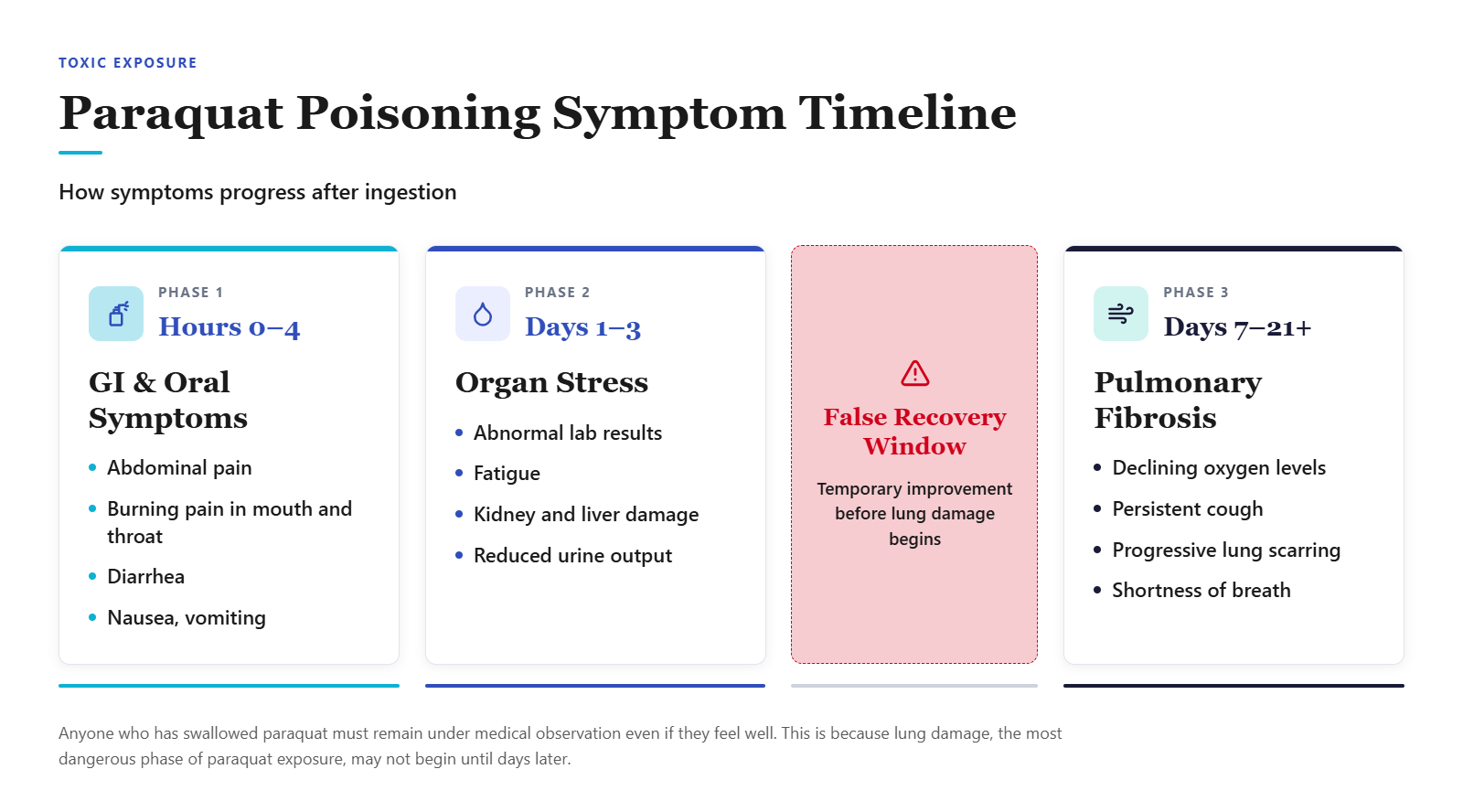
Symptoms of paraquat poisoning happen in stages. Stomach problems usually start within minutes to a few hours, while damage to organs and lung scarring can take days or weeks to develop.
In the first few hours after paraquat exposure, you may feel burning pain in your mouth and throat, nausea, diarrhea, vomiting and stomach pain. Days one through three can bring kidney and liver stress, tiredness and lower urine output. During days three through 21, you may experience increased lung scarring, worsening shortness of breath, cough and reduced oxygen levels.
After the first stomach symptoms begin, some people may feel better for a few days before lung problems start. Doctors call this a “false recovery window,” which means it is not a real recovery. Life-threatening lung and pulmonary damage can follow several days later.
Anyone who has been exposed to paraquat should stay under close medical care, even if they feel fine. Early improvement does not mean they are safe from serious lung problems later.
What Is Paraquat Tongue?
Paraquat tongue refers to the severe oral damage caused by swallowing paraquat. It is often one of the first signs of paraquat poisoning.
Paraquat tongue appears early after ingestion because the tongue comes into contact with the toxic chemical first. Its presence signals a medical emergency with a high risk of poisoning.
- Burning sensation
- Excessive saliva and difficulty swallowing
- Lesions and ulcers on the tongue
- Tongue swelling and redness
- Severe pain
How Do I Know If I Was Exposed to Paraquat?
In the U.S., paraquat is blue in color and has a strong chemical odor. If you used a blue weed killer that had a “Restricted Use” label, it might have been paraquat. Work records and old labels can help confirm whether you worked with the pesticide.
People who handled paraquat, like applicators and farm workers, will likely remember its blue hue and distinct smell. They may have encountered paraquat directly through contact with the chemical or by not wearing full protective gear.
It is possible to be exposed to paraquat without handling it directly. People may have come into contact with paraquat if they worked in fields treated with the chemical, lived near areas where someone applied the herbicide or drank contaminated well water.
Some people were poisoned because they accidentally drank paraquat that had been put in bottles or jugs. Even touching the liquid can cause serious harm. Since 2000, accidental ingestion of paraquat has resulted in 17 deaths.
If you think you came into contact with paraquat and later received a Parkinson’s disease diagnosis, an attorney can help you understand your legal options.
Paraquat Long-Term Health Effects and Legal Rights
The long-term health effects of paraquat exposure include a risk of Parkinson’s disease. People who were diagnosed with Parkinson’s following years of exposure to paraquat have filed thousands of lawsuits. Many cases were settled in 2025.
Getting through the first 30 days after paraquat poisoning does not guarantee a full recovery. It’s possible to develop worsening lung problems and long-term organ issues that can appear months or years later.
- Esophageal scarring:
- Paraquat can damage your esophagus, causing it to narrow and making swallowing difficult. In some cases, surgery may be needed.
- Heart failure:
- Research suggests paraquat poisoning can damage your heart by making blood vessels leak and weakening the heart muscle. This reduces your heart's ability to pump blood and can lead to heart failure.
- Kidney failure:
- Paraquat can build up in your kidneys and lead to lasting damage. This may necessitate dialysis immediately after exposure.
- Lung damage:
- Damage can be so severe that you may require a lung transplant.
- Pancreatic injury:
- A study in Clinical Toxicology suggests higher paraquat levels in the blood were linked to greater signs of pancreatic injury, though serious pancreatitis was not found.
- Pulmonary fibrosis:
- This is the ongoing scarring of the lungs, which makes it harder to breathe and can eventually require supplemental oxygen. Once lung scarring starts, it typically cannot be reversed and may keep getting worse.
Studies Find Paraquat-Parkinson’s Link
Studies show that Paraquat exposure may double your chance of being diagnosed with Parkinson’s disease.
A 2024 study in the International Journal of Epidemiology discovered that people living or working close to places where paraquat is commonly used have nearly twice the risk of developing Parkinson’s disease. The study also found that the risk increases for those who are exposed to the herbicide for a long time or in large amounts.
In 2011, an article in the journal Environmental Health Perspectives found that people who used paraquat were more than twice as likely to develop Parkinson’s disease than those who didn’t.
Scientists think paraquat may damage the brain cells responsible for making dopamine by triggering oxidative stress. This is when unstable molecules known as free radicals build up faster than the body can remove them. Researchers say paraquat’s toxic effects can also harm many organs, including the lungs, nervous system and immune system.
While the evidence linking paraquat to Parkinson’s disease is substantial, paraquat manufacturer Syngenta disputes a causal relationship. Regulatory bodies, including the Environmental Protection Agency (EPA), have not formally classified paraquat as a cause of Parkinson’s disease.
Parkinson’s Disease-Related Paraquat Lawsuits
As of October 2026, there were 4,224 paraquat lawsuits active in an Illinois federal court, along with other cases that are active in a Pennsylvania state court. The Illinois cases are part of a multidistrict litigation (MDL). MDLs consolidate several similar lawsuits into a single litigation to make the legal process more efficient.
Settlement talks in the MDL have been underway since 2025. On March 2, 2026, the MDL judge approved a Qualified Settlement Fund (QSF). A QSF is a special legal trust account used to hold, manage and pay out money from a legal lawsuit or settlement. This suggests that a paraquat settlement is near.
In July 2025, paraquat manufacturer Syngenta settled the first of thousands of lawsuits in the multidistrict litigation (MDL). Details of the settlement were not released.
According to a court document dated April 14, 2025, lead attorneys for both the defendants and plaintiffs in the MDL entered into a paraquat settlement agreement to resolve “this case and many others” in the litigation.
Treatment and Urgent Actions After Exposure
Paraquat poisoning is a serious medical emergency. There is no specific treatment. Immediate medical attention is crucial for the best chance of recovery.
Immediate First Aid Steps
Ingesting even a small amount of paraquat is a potentially deadly medical emergency. It’s important to seek medical help immediately.
- If poisoning is suspected, go to an emergency room immediately.
- Remove contaminated clothing and wash (do not scrub) exposed body parts for at least 15 minutes.
- Use supplemental oxygen cautiously. Let emergency responders know if you have been exposed to paraquat. High-flow oxygen can worsen lung damage from paraquat, so medical teams will monitor your oxygen levels closely.
- If paraquat gets in your eyes, flush them with water for at least 15 minutes.
Emergency Resources
You can call the national toll-free Poison Help Hotline at 1-800-222-1222 from anywhere in the United States. Poison experts can provide instructions over the phone.
Paraquat poisoning is rare, so some emergency teams might not recognize it right away. If you can, take the product container or label to the emergency room with you to help medical staff identify the chemical quickly.
Documenting Your Exposure
Keep a record of how your exposure occurred and any symptoms you have. This information is vital for treatment and potential legal claims. Taking notes, photographs and saving product containers can also help prove exposure later on. Quick reporting provides accurate information for medical and legal support.
Write down the product name and EPA registration number from the label, then safely store the container. Document the date, time and location of your exposure. Note whether you were wearing protective gear, who saw what happened and if any work records mention the product or site. This information can help medical teams and keep the facts accurate.
Common Questions About Paraquat Exposure Symptoms

Calling this number connects you with a Drugwatch.com representative. We will direct you to one of our trusted legal partners for a free case review.
Drugwatch.com's trusted legal partners support the organization's mission to keep people safe from dangerous drugs and medical devices. For more information, visit our partners page.